You can’t take the midnight train going anywhere, but you can safely ride O-Train Line 1 until 2 am on Friday and Saturday nights. And OC Transpo night bus service covers many major stations every night of the week when the O-Train isn’t running.
At night, just like during the day, customer safety is our top priority. Safety programs like Safe Stop and station features like Night Stop are just two examples of how we bring a focus on safety into our service. But safe service is more than programs, it relies on the dedication of staff who make customer and employee safety the main part of their work every day.
This time on The Next Stop Blog, we’ll cover the basics of night service and safety features, and hear from two OC Transpo employees who love the late shift to find out how safety plays a central role in their work.
Getting around by bus at night
Many bus routes across the city run after midnight including Routes 6, 7, 12, 44 and 88. Check the scheduled time on the schedules and maps page to see how late your regular routes run.
Dedicated OC Transpo night bus service also runs all night after O-Train Lines 1, 2 and 4 have ended. O-Train service hours vary by line. You can find out the hours on our night service page.
Most Night routes run about every 30 minutes through the night. To make it easier to connect between downtown, all night routes except Route 105 are extended to Rideau Station overnight.
Night routes are indicated with the letter N. They are shown on bus stop signs and maps with a yellow moon and star icon.

OC Transpo staff are here to help
Providing transit all night means that employees are working around the clock making sure everything is running smoothly. Every night, employees are on the job in the Transit Operations Control Centre, on the road or on the tracks, and at stations, monitoring service and activity on the transit system.
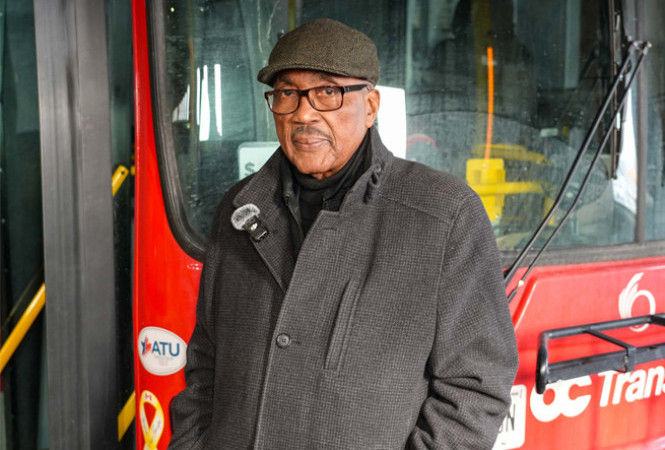
Supervisor Cliff has worked at OC Transpo for around 25 years. He prefers to work a shift that ends late at night.
“I love not knowing what the night will bring. Transit is by nature a very structured environment, but there is a lot going on in the background at any one station that is unpredictable. As a supervisor, I really enjoy being a part of the solution and helping customers when any issues arise.” — Supervisor Cliff

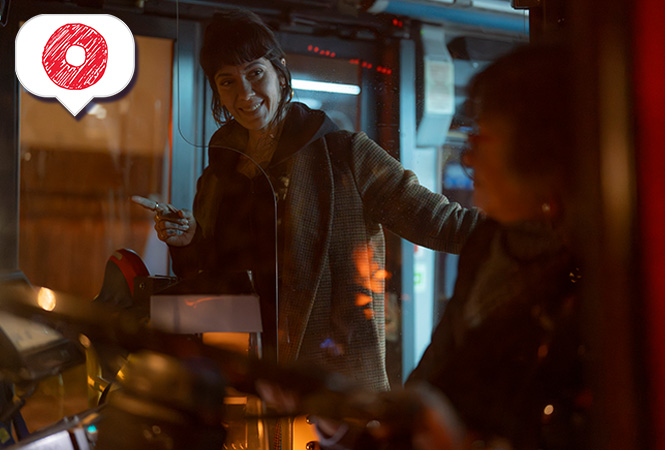
Bus operator Sharon, who has been driving at night for most of her 35-year career with OC Transpo, also prefers work after dark. She says the traffic is much calmer than during the day, which allows her to focus more on her customers.
“I always notice the body language of customers as they board. If someone is timid or nervous, I remind them that they can sit near the front if they feel uncomfortable travelling at night.”
“I also like to greet each customer with a friendly hello. I find this helps to break the ice. Engaging with someone helps them to let their guard down and lets them know that they can talk to me if they need to.”— Sharon

Similarly, Cliff is carefully attuned to the behaviour of customers who pass through his station.
“I’m always looking out for anyone in distress. Even with people who are shy or nervous to approach and ask for help, you start to recognize how they act. I try to make sure that I’m visible to customers as much as possible, so that they know someone’s nearby keeping an eye on things.” — Supervisor Cliff
Looking out for customer safety
“Good service is really about safety. We’re always looking out for anything that could turn into a safety issue. Anything from adjusting service, monitoring operations, sharing information with customers, supporting vulnerable populations, to conflict resolution. If we can address hazards immediately, it saves trouble later.”— Supervisor Cliff
Cliff explained that because he can communicate quickly with the Special Constable Unit (SCU) and the Control Centre any time a safety issue comes up at the station, there are eyes on it immediately.
“I work closely with SCU every day; we have an active communications network across the organization responding constantly to what’s going on.”— Supervisor Cliff
Sharon emphasized that her biggest priority each shift is driving the bus safely. But she’s also aware of the safety of the community. There have been times when Sharon has found some of her regular customers in unsafe situations, either lost or unwell, in locations where she wouldn’t usually expect to see them.
“Operators know our routes really well, but we also get to know and care about the communities that we drive in. You recognize people, you start to learn what’s normal on that route, which also helps you to notice when something isn’t right.”— Sharon
Sharon explained that looking out for the community is a key part of the Transecure program, which is OC Transpo’s community watch program on wheels. Bus operators have their eye out for community safety 24 hours a day, seven days a week.
Safety tips from the front line
When asked for a night safety tip, Sharon suggested that customers travelling at night should familiarize themselves with the Night Stop location at stations.
“After 9 pm, all buses stop at a centrally located, well-lit stops near station entrances. These are called Night Stops. Some customers walk right past this stop and wait farther down the platform just out of habit.”
“When I see customers standing alone at the far end of the platform, I check in with them to make sure they know where to wait.”— Sharon
Night Stops are purposely designed so that customers waiting for different routes can wait together. This reduces risk for anyone waiting alone. The Night Stops are also located close to other amenities like the emergency phone and pay phone. Night Stops are indicated with yellow and black signage with the Transecure owl logo.

Cliff’s advice to customers was that they should never feel shy to ask for help.
“If customers are feeling unsafe or uneasy, they shouldn’t hesitate to tell someone. Sometimes customers think their situation isn’t serious enough to ask for help. But don’t hesitate to press the button on the emergency phone, or to speak with an OC Transpo employee at the station. We’re all here for you.”— Cliff
Emergency phones are located at all stations. They are often placed on a yellow pole for visibility. Pressing the button connects you directly with the Special Constable Unit. Every call will be answered.

After 7 pm, customers can also ask their bus operator for Safe Stop, which is a program that lets customers get off the bus at a safe location between stops. This program is meant to reduce the distance you have to travel to your destination at night.
If you’d like to get off between stops, let the operator know when you board, or mention it while the bus is not in motion at a stop.

Safer together
Safety works best when everyone is looking out for each other. That’s why for Sharon and Cliff, their jobs are more than driving the bus and supervising the station.
“Operators, Special Constables, supervisors, any OC Transpo employee—we’re all a resource for customer information or assistance.”— Sharon
Other useful features for travelling at night
- Transecure waiting areas on O-Train platforms
- Pickup and drop-off areas for taxis and ride-hailing services, located at many stations across the city.
- Ability to take bikes and personal e-scooters on the bus and O-Train
- Reflective bus stop signs and backlit wayfinding screens