Algonquin Wayfinding Wheel
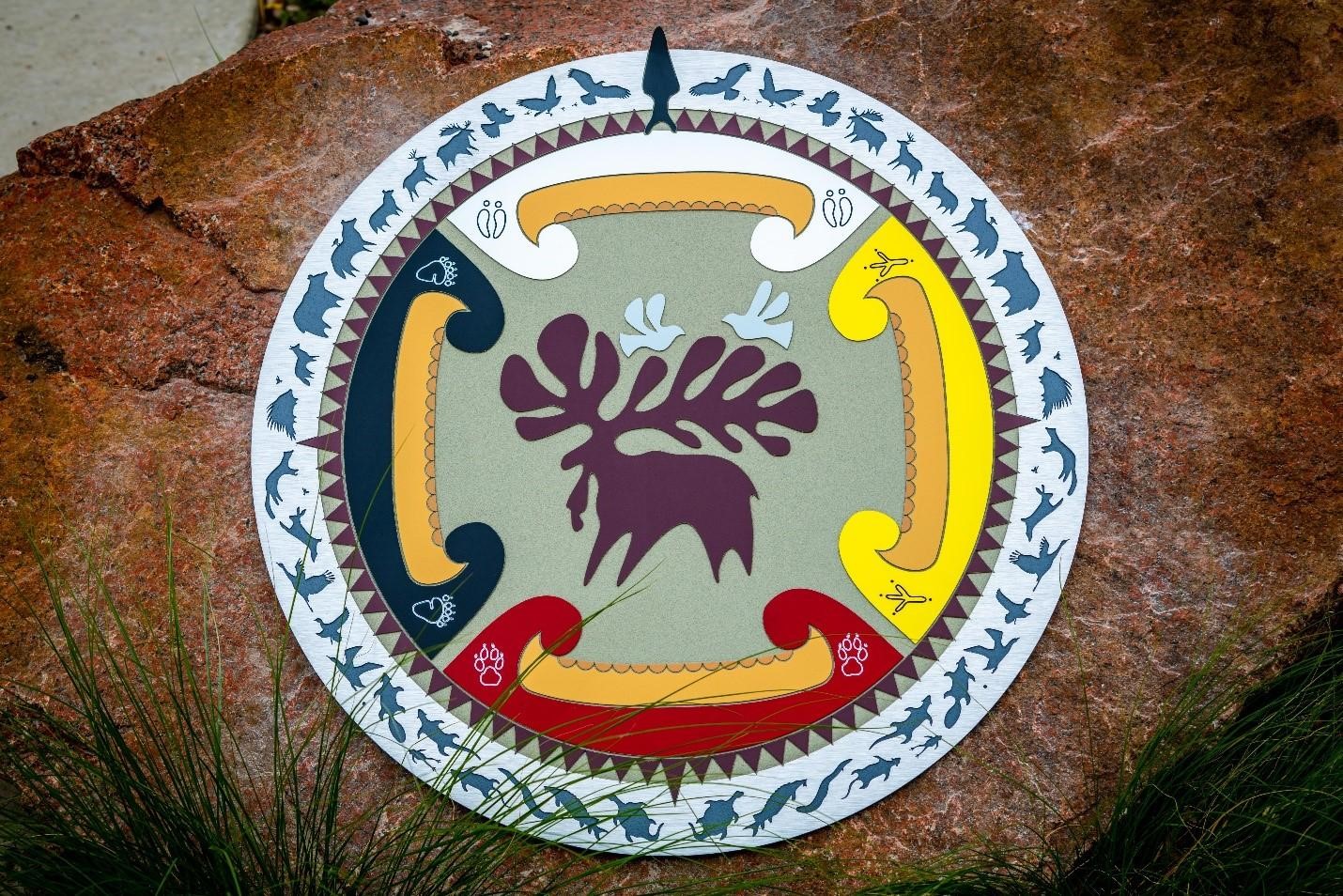
A unique symbol of traditional Algonquin territory, history and culture
Designed by Algonquin artist Simon Brascoupé, Kitigan Zibi Anishinabeg, and inspired by the traditional four sacred directions, the Wayfinding Wheel reflects Algonquin culture and the history of the Algonquin territory.
The Wayfinding Wheels are attached to boulders found in Algonquin territory from the beginning of time. They will be installed at all O-Train stations and at Ottawa City Hall along with plaques that describe the significance of the depicted animals and symbols to the Algonquin peoples.
The Wayfinding Wheel was designed through a participatory process involving Algonquin Elders and community members from Algonquins of Pikwàkanagàn First Nation and Kitigan Zibi Anishinabeg, as well as representatives from the Algonquins of Ontario (AOO) organization. The design includes representations for all four compass directions and an orienting arrow that points north, along with important Algonquin symbols such as the canoe for transportation and animals that are important to the Algonquin peoples, including the moose in the centre of the design symbolizing food and strength.
Description
The North directional symbol represents a copper Algonquin spearhead that is 4,500 to 5,500 years old. In the centre is the moose, who teaches us to live in harmony with nature.
The four sacred directions remind us of life’s cycles; we are born in the east, as children, and move through life as youth, adults and elders.
The canoe was selected by elders to represent travel, such as light rail. The canoe is made from white birch, which is beneficial to Algonquin people as medicine and as building material for canoes, baskets and shelter. Entwined with the canoe is a medicinal plant symbol found on ancient Algonquin birch bark baskets.
There are 22 animals which have been identified as significant to Algonquin people. Along the bottom you can find turtles, then fish and eels and water mammals. Along the edge are land mammals, from small to large, and along the top are birds.
The rickrack pattern represents trees and hills, and honours Algonquin culture from the past, present and future.
Video Resources
Artist Simon Brascoupé narrates a video tour of the Algonquin Wayfinding Wheel and provides insight into the significance of the animals and symbols depicted in the design.